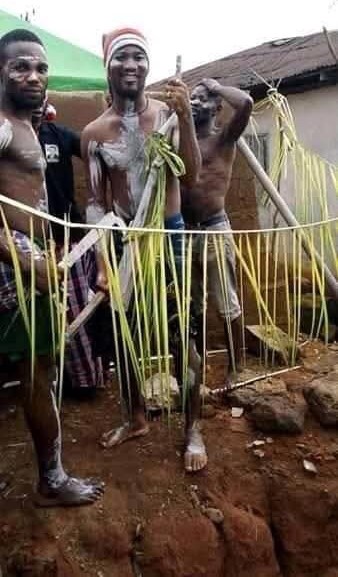
It is a common belief that all the eight Kindred’s that were the original founders of Ozu have special
function to perform in ‘Oso Ozu’ festival. Some pundits argue that without such participation, then, every
other thing may be in doubt.
The word “Oso” in our local dialect means ‘race’. Therefore, ‘Oso Ozu’ may imply- to do a race, or to
perform a race. It could also be suggested to mean a participation in what seems like a ‘marathon’ by able
bodied youths of the community. In this case, it is not just the ordinary marathon race that is usually
observed in the stadia by athletes. This one is a culture introduced by our fathers as a way of training the
youths of the community to be responsible in the face of daunting challenges.
Amongst other festivals, ‘Oso’ festival and Ekpe festivals are considered as ‘rites of passage’ of a particular Age Grade in a given season for some periods of time. Like Ekpe festival which is a special dedication to the new yam culture, ‘Oso’ festival is an event observed in the month of November every year in Ozu cultural setting. It is believed that when a particular Age Grade gets to the level of embracing or enrolling into this festival, such Age Grade would be seen as having climbed to the highest in the socio-cultural ladder in the community. This is a final graduation level in social measurement. After an Age Grade has finally celebrated the ‘Oso’ festival, that Age Grade is now said to have grown into “Ndi-Ichina” category. It is also regarded as a traditional retirement festival. Other neigbouring communities such as Ohafia, Abiriba, Igbere, Nkporo, and several Abam communities may have different appellations to qualify this final retirement stage in the social measurement.
‘Oso Ozu’ festival is celebrated yearly. It is usually celebrated on “Afor Market” day. It is called “Afor Oso Ozu”. A particular Age Grade takes the round for three consecutive years before rounding off the ceremony. The first year for the Age Grade “Uke Oso”, is “Iburu Nzu” to signify that that particular Age Grade has initiated the journey for retirement in the socio-cultural structure of the land. The final phase marks the beginning of another journey into a new phase in the life of the individual male or female in the socio-cultural organogram of the community. The Age Grade is usually made up of the men and women who are the initiates of that Age Grade.
At every given season or year, this group would ensure that adequate preparations are made for a successful festival. They define a particular outfit to distinguish them from the previous ones. They observe some concrete rehearsals which makes the preceding weeks and days to be laced with enlivening activities that fires the community with festive conviviality. At the final phase after three years of the event by the Age grade, they come out in colours as almost all of them present what is called “Ule-Okara” erected ubiquitous across every available space in the community square to be appreciated by all and sundry.
‘Oso Ozu’ festival is believed to have been introduced by our fore-fathers to register their gallantry in the pre-historic warfares that they fought across the length and breadth of Igbo land. It is a culture with the sole expression of fundamental heroism. The lyrics and the blaring of the “Okerenkwa” totemic drums amplify this thought unequivocally. One of such renditions by the “Okerenkwa” drum is: “Egbua-ndoo; Ndoo so, Ndoo-la”. Everything about the ‘Oso’ festival is an indication of heroism and strength. It is a display of unrivaled capacity by a people who were historically notorious for wars even with minimal and insignificant rewards. ‘Oso Ozu’ captures this feeling of historical nostalgia to the core because the people were known for fighting as mercenaries and warriors. The most interesting aspect of the festival in the hagiology of Ozu history are the preparations put into this festival. The preambles across the Kindred’s and across the entire community remains supposedly eclectic as the entire atmosphere within the season and period depicts a society that is agog with memories of heroisms of their forebears and legendary gallantry. It all starts with the clearing of “Ebele Ozu”, the historic headquarter of Abam’s religion. It is a sacred square with all the paraphernalia of archeological history. At “Ebele” square is the legendary “Ikoro Uku”. This is a wooden gong that is the size of a gigantic monument. It was pre-historically used to summon the people during the periods of emergencies and as a noel to celebrate heroism. It is drummed by experts who are well versed in the logic of the “talking drum”. The hut housing the “Ikoro-Uku” drum is a 12-X-12 capacity erection, half-walled and usually daubed with white paint especially during the season of the ‘Oso’ festival. That drum is not an ordinary instrument. It is believed to be surrounded with some mysticisms, little wonder, none initiates dare not get closer to it. It is believed to be drummed by Nkwo-Mkpu people only. This exclusiveness and prerogative has over the years being exercised by these Kindred. The veracity of this assignment is to be further proved although it has remained unchallenged in centuries.
During the ‘Oso’ season, “Ebele” square puts up a perfect new look. The upper chambers of the square which serves as the administrative platform where the sculptured monument of “Okeke Isi- Agbara-Ikoro” is erected with the “Ikoro Uku” is demarcated with “Omu” all around the chambers; to restrict violation of entry by non-initiates, and non-members of the Kindred. The reason is because; this is a sacred place with all the vicissitudes of the ancient powers, influences and antiquities. It is also believed that the skull of the legendary “Ugbu”, (the renegade who constantly terrorized the Ozu community from Ohafia and was regularly abducting women on the Ohafia route as they went there for market or other allied transactions). It was alleged that “Ugbu” would hide on the top of a tree with a long rope in which he would use to draw back the last person behind as they walked in a single file. The mayhem kept repeating itself until a day came when his cup of atrocity was full and he was apprehended by Ozu warriors who ambushed him and got him arrested. He was alleged to have been arraigned at the “Ebele” square where he was tried and sentenced to death.
The “Okerenkwa” drum also hymns the “Ugbu” saga as it is been played even till date during the ‘Oso Ozu’ festival. The totemic drum roles it out thus: “Ugbu-ye, ndaa-aka iji egbu mma; Ugbu-ye…Kpendu-Kpendu” as tuned by the ‘Nne’ “Okerenkwa”.
PARTICIPATION OF THE EIGHT KINDREDS (OBI-ASATO) IN THE OSO OZU FESTIVAL AND THE RITUALS.
UMU-UKA KINDRED:
It is believed that ‘Oso Ozu’ does not set sail on that festival day except when Umu-Uka Kindred had navigated the entire village beginning from their ancestral Obi at Ihu-Ezi compound where it is believed their traditional altar resides to ‘Isi-Uzo’ Ama-Etiti the supposed end-point of the community with “Akpatakpa” drums. “Akpatakpa” drum is another totemic investiture that celebrates the pre-historic heroism of the people. “Akpatakpa” is a ritual that is performed to sanctify and purify the land before ‘Oso Ozu’ takes off in earnest. The warriors in their special regalia of George wrappers, daubs themselves with “Nzu” on their naked bodies with their coloured lion caps. The lead warrior stands in front with a long sword daubed with “Nzu”, he raises the sword up permanently with his right hand balancing it cylindrically on his face uttering no word or speech until the rally comes to a halt back at their ancestral headquarters. The “Akpatakpa” movement is neither swift nor brisk; it is a slow movement that stops at interval and continues until the trail is over. Wherever they stop, they would recite a murmured panegyric: “Annh!!!!” by the lead vocalist, and the rest would echo, “Nyoooo!!!!!” and the “Akpatakpa” drum would roll out again. So it is believed that one of the outstanding totems that symbolize the “Oso” culture in Ozu history- “Akpatakpa” is under the custody of “Umu-Uka” Kindred.
UMU NDE-A-NKWO KINDRED:
Nde-a-Nkwo Kindred are the traditional custodians of the historic “Opia”. This sword of war is one of the
most noted totems that symbolize Ozu ancient history. The sword is an iron cylindrical object that is
two-edged, with two sharp coiled bend at the empty tip of the sword. This “Opia” is very symbolic and
legendary. It symbolizes the heroism and indefatigable prowess of our fathers in fighting wars at the
pre-historic era. The legendary “Nkwo-Mkpu” who is the progenitor of “Umu Nde-a- Nkwo” Kindred, was
expressly acclaimed as a man of war. He was deeply skilled in the acts of war and aided the community in
several wars to which victory was guaranteed on the side of Ozu. He fought and defeated “Akwuma”, a
notorious terrorist that was killing and abducting Ozu natives especially during the planting season that
many families went to farm for planting and cultivation- “Ochu season”. Children and lactating mothers who
were vulnerably left behind at home became the ready victims of this notorious renegade- “Akwuma” who
constantly abused this vulnerable group by abduction and murder. He was also noted to have been a celebrated
criminal specializing in the stealing of yams and goats and other domestic valuables. He was a gang leader.
When his illicit trade got to its nadir, Ozu people led by their war leader “Nkwo-Mkpu”, plotted the war
against “Akwuma” and he was defeated. It is alleged in the history of Ozu, that the sword of war or “Opia
Aha” that is usually borne by “Umu Nde-a-Nkwo” during “Oso Ozu” festival is the very weapon that was used to
execute “Akwuma” the notorious criminal war-lord. This Kindred is also believed to be the drummers of the
great “Ikoro-Uku” which for centuries have inhabited the Northern tip of “Ebele”.
It was at “Obi Nde-a-Nkwo” ancestral chambers that the various human heads that our fore-fathers harvested
during the various wars they fought at various points and locations were kept. Up until the middle of 20 AD,
this site was still spotted with dotted human skulls of different sizes. “Obi Nde-a-Nkwo” is directly
situated behind “Ebele Ozu”. This strategic situation underscored the historical importance of the “Obi” in
Ozu history in that it was a site that registered the very essence of Ozu people and why they are referred
to as “Ozu Oba wu Enyi”. A sobriquet that is a symbol of strength, heroism and agility.
On the “Afor Oso Ozu” day, after “Umu-Uka” Kindred had navigated the village with their “Akpatakpa” drum and as “Oso Ozu” adventure seems triggered with the youths on course; Umu Nde-a-Nkwo, from their ancestral “Obi” at Ndi “Awa” compound, having offered their sacrifices at the chambers of their oracle “Imo Ohuma” and pouring libation at their ancestral square in front of the “Nfijioku” oracular chamber dotting the altar at “Ogo Nde-Awa” would march out in dancing colour with all the men of the Kindred, youths and teens to “Obi Nde-a-Nkwo” a furlough behind “Ebele Ozu” where they tarry to wait for the return of “Oso Ozu”. As they depart their ancestral compound, dancing in colours, their lead warrior would be geared with the historic “Opia-Aha” as he stays in front swinging the metal object left and right in such a frenzy that demonstrates possession by the gods. It is always believed that the man that bears the “Umu Nde-a-Nkwo” sword must be the one appointed by the gods and chosen by the ancestors to lift this legendary paraphernalia.
OTTAI KINDRED:
“Afor Oso Ozu” is usually an event of unprecedented colour. Like stated earlier, our fathers used this
festival to demonstrate their unity and oneness soon after the community evolved.
Another outstanding unit in the structure of the event is the gallant ‘Ottai’ Kindred. Once “Umu-Uka” had gone round the village with the “Akpatakpa” drum and as “Umu Nde-a-Nkwo” had geared up in their dancing colours to head to their “Obi” behind “Ebele” Ozu, next is “Nde-Ottai” who with all their able bodied youths and men dressed in the native George wrappers adorned with their lion caps crested with Eagle feathers, after making the necessary sacrifices and pouring libation to their deity (Uda Mini-Ufuforo) at its chambers, would march out from their ancestral “Obi” at “Amankwu” compound in dancing regale. Like “Umu Nde-a-Nkwo”, they too would march in cluster surrounding their Kindred Head whom they lead in traditional march to “Ebele Ozu” and branching off to “Obi Nde-a-Nkwo” where in the company of “Nde-a-Nkwo” Kindred awaits the return of “Oso Ozu”. History had it in strong authority that this Kindred with the youths of “Umu Nde-a-Nkwo”, keeps dancing back and forth from “Obi Nde-a-Nkwo” to “Ebele” Ozu which they would observe seven historic times and “Oso Ozu” would return.
UBIOM OR EBEM-IYI KINDRED:
‘Ebem Iyi’ Kindred or ‘Ubiom’ happens to be the Kindred that is the traditional custodian of the “Okerenkwa”
drums. The “Okerenkwa” drum is a five or six pieces wooden construct which are in various sizes. A night
preceding the “Oso Ozu” festival is remarkably observed as the rehearsal evening at the sacred shrine of the
Ebem Iyi Kindred. On that evening, the sacred chamber is cleared and the drums artistically arranged for the
rehearsal. One could hear the “Okerenkwa” drums rolling out those beautiful lyrics in praise of the
pre-historic heroism of the Abam people. The drums are exclusively handled by this Kindred only, as it is a
traditional sacrilege for someone who is not by blood a member of that Kindred to touch the sacred drums.
The rhythm and the lyrics of the “Okerenkwa” totemic drums and the secret and sacred languages thereof is
only understood by this Kindred. On that rehearsal evening, the air is overwhelmingly overshadowed by the
talking of these drums across the spectrum. Children and enthusiastic spectators gather at the ‘Ebem Iyi’
ancestral ground close to their sacred water “Idogo” which harbors their deity.
On the “Oso” day, a sacred demarcate is designed at the entry of “Ebele” ground quite exclusive. It is at this demarcate, that the able youths of the ‘Ebem Iyi’ Kindred carries “Okerenkwa” drums and fix same at the sacred enclave in its sizes. It is a taboo in our custom for none member of the Kindred to enter that sacred chamber where the “Okerenkwa” drums are displayed. The demarcation is constructed with palm-fronds and only the drummers’ gained privileged entry into the spot for the drumming. It is believed that persons who may not be of the Kindred but often penetrates the “Okerenkwa” sacred chamber at “Ebele Ozu” are those whose fathers were believed to have harvested human heads or themselves did during the periods of our warfares across Igbo land. Such privilege was a remarkable register of heroism and the acknowledgement of historic gallantry of our fore-fathers.
As soon as Oso Ozu departed, the “Okerenkwa” drums would be assembled at the traditional spot at “Ebele” by the ‘Ebem Iyi’ warriors. The drums would be blaring all through the day as ‘Umu Nde-a-Nkwo’ and ‘Ottai’ Kindred kept dancing to and fro from their sacred shrine to Ebele Ozu arena in an artistic style; Nde-a- Nkwo, waving the ‘Opia Aha’ in response to the talking drums and the shout of “Gbua-ria-o, Ho!” as often as possible under the admirable cheers of the chemistry of spectators- usually men, women, teens and visitors from various walks of life who surrounds “Ebele Ozu” sacred square eagerly waiting for the return of “Oso Ozu”.
“Okerenkwa” drums speak in mystic tones. Its language is heard by those who have ears to hear. It speaks in parables and in panegyrics. It praises the heroism of our fore-fathers and celebrates the illustriousness of our sons. It usually echoes melodies of war and the victories thereof. It reminds the current generation of the gallantry of their fore-bears and the trophies which were resembled by the human heads that our heroes came home with.
Ours was a history of heroism and unprecedented conquests: the “Okerenkwa” drums always attest to that in the mystic display; “Egbua-Ndoo; Ndoo-so, Ndoo-laa”. The drums also blare in nostalgia the victory over “Ugbu” the notorious serial killer from Ohafia whose trade was the abduction and kidnap of Ozu people and killing them thereafter. The drum roll’s it out thus: “Ugbu-ye ndaa aka iji Egbu mma, Ugbu-ye, Kpendu-Kpendu!!” The “Okerenkwa” drum blare’s in reminiscence to the warring agility and dexterity of the people. As stated earlier, it is a talking drum whose language is only heard by the ‘people’. It drums all through the day, and when “Oso Ozu” returns, the ebullient and masculine ‘Ebem Iyi’ youths after the cutting of the “Omu” used in demarcating the “Okerenkwa” altar, at “Ebele”, having lined up in waiting, speedily rushes into the chamber, each picking one of the drums, as arranged by the Kindred in what seems like a deafening haste much to the chagrin of the on-lookers and races back to their ancestral sacred “Obi” near “Idogo” which is their sacred water that houses their sacred fish which is the symbol of the “Idogo” deity and the sacred identity of “Umudi Ebem Iyi or Ubiom”. The climax of their display too, is the arrival of the ‘Ebem-Iyi’ Kindred kits and Kins led in marching colours by the Kindred Head who blazes the trail by stepping into the Ebele Square amidst the spectacle of the deafening crowd.
NSAMA KINDRED (UMUDI NDI-A-NSAMA):
Nsama Kindred is strategically seated at the “Ebele” square with all the paraphernalia of their ancient
glory patiently waiting for the return of ‘Oso-Ozu’. Nsama Kindred also have the prerogative of penetrating
the “Omu” that is used to demarcate the chambers of the great “Ikoro-Uku”. Every year, they observe this
entry (Ikpu-Omu) at the ancient land mark by their sitting Head Chief accompanied by the entire retinue of
the Kindred young and old in marching colours. This ritual is to go greet the “Ikoro” whilst the drummer
uses the language of the “Ikoro” to hail the Kindred and the heroism of their ancestors. After that, they
also move to the site of the “Okerenkwa” to also pay homage whilst the drum echoes in poetic rhythm.This
moment brings to the fore the ancient glory of this Kindred as their display often arouses a cheer of
approbation.
AMAELU KINDRED:
‘Amaelu’ Kindred has their ancestral home in Amaelu. Famed
to be the cradle of Abam history. ‘Amaelu’ presently is a land sparsely inhabited by the descendants of
Onyerubi. Their greater number dwells among the other Kindred’s in Ozu land even as they swear their
allegiance to their ancestral ‘Obi’ which they visit at will for important Kindred matters.
This Kindred plays a important role on the “Oso Ozu” day and other days preceding the ‘Oso’ festival.
Libations are poured on the ancestral oracular chambers on the eve of the ‘Oso’ festival, and the chambers
carefully demarcated with “Omu” as the members of the Kindred seat in waiting for the arrival of “Oso Ozu”
so that they would perform the last ritual of purification of “Oso” by smearing the youths with a mixture of
“Nzu” and water which they add up with some concoctions that possesses some itching reactions on the bodies
of the youths on the “Oso” trail. This experience alone creates a lot of discomfort which invariably makes
the youths on the “Oso” trail to dread passing through the ‘Amaelu’ chambers as “Oso Ozu” approaches the
shrine. Here, some youths are seen running helter-skelter, to evade the touch of the concoction but the
“Ibusa Uzo-Oso” bearing the ancestral “Ogele Oso Ozu” and his closer men especially the one bearing the
“Opia” with all the able bodied youths from “Okorukwu Obia” or “Umu Ndi-Okorukwu”, would after some delays
for the purification rituals to be completed hurriedly defy the negative efficacies of the concoction and
break the “Omu” at ‘Amaelu’ ancestral and oracular site and take the “Oso Ozu” through that excruciating
dart towards traditional “Uzo Oso” located at “Nde-Uka-Nsi” bush track, a territory of Nde-a-Nkwo kindred.
Once “Oso Ozu” passes ‘Amaelu’ ancestral land and having ensured that “Oso Ozu” was intact and the ritual of purification executed, members of ‘Amaelu’ Kindred especially those living in the mainland Ozu, would be seen returning home in single file with their Kindred Head been in front and taking the lead.
NDE-ONU KINDRED:
What seems to be “Nde-Onu” Kindred today exists in a very insignificant demography. Many of their Kins men
died as a result of the virulence of the ‘charm’ that was said to be buried in their ancestral home by “Nnem
Orukwu” of Idima Abam. The story of this epic woman is immeasurably aligned to her vindictive anger which
was provoked by the death of her son who is said to have been killed by the people of Ozu in one of those
fateful days of ‘Oso Ozu’ festival.
‘Nnem-Orukwu’ saga is not unknown in the ancient history of Ozu mythology. She was said to have haboured the venomous anger against the people of Ozu and was nefariously inclined to the total annihilation of Ozu community because of the death of her son popularly referred to as “Nwa-Nnem-Orukwu”. It was to execute the consequence of this troubling anger of vengeance that ‘Nde-Onu’ became the collateral object of damage. Today, one would only see a scion or small remnant left of this Kindred although most may be hidden as they have been enmeshed into the bulk of Ozu population and or as they are dispersed abroad into several unknown entities around our boundaries.
‘Nnem-Orukwu’ saga is a historical metaphor which is a display of both anguish on the side of Idima and gallantry on the side of Ozu in that period in question. This story connects Ozu people and Idima in legendary sense. The story revealed that a certain gang of over-zealous young conspirators privately mutinied to assassinate the ‘lead warrior’ of Ozu during ‘Oso Ozu’. Of history, the lead warrior “Ibusa-Uzo-Oso”, is remarked as the symbol of Ozu military authority because he bears the ancient “Ogele Oso Ozu”, and is ensconced by tens of other warriors principal one of which is the bearer of “Opia-Oso”. The other warriors surrounding the lead warrior, ensures the safety of the lead warrior and as the trail blazed, they would be chanting the war shibboleth: “Gbua-ria-o!” and the rest would echo, “Ho!” This chant is repeated thousand times often, as it is the main panegyric of the festival. History has suggested that the energy and verve that is associated with this chant gallantly depicts the nature and attitude of the festival.
One may then wonder how this Kindred is connected to ‘Oso Ozu’ as it is a prudent supposition to argue that the eight Kindred’s that originally procreated the land are all seen to be involved in the ‘Oso Ozu’ festival in one way or the other? Nde Okorukwu is not a site in isolation. It is a political enclave that serves as a melting-pot for all and sundry. Because of its strategic nature, migrants find it a better haven. The massive migration of Nde-Onu people to this site is a historical destiny. Hitherto, it is suggested that the bulk of Nde Okorukwu is of Nde-Onu extraction. These suppositions have gained solid traction because no other Kindred is said to wield super-sway in this polity than the ‘Onu-Nta-Ikpo’ people whose history here is legendary. They have been there for thousands of years.
It is of note to argue that the {custody} of “Ogele-Oso-Ozu”; the ancient totemic symbol of Ozu military might is kept here at Nde Okorukwu principally because of its strategic situation. That totem is symbolically prestigious as it connects the people with their ancestors and constantly rejuvenates the spirit of the unity of the people which was the supreme ideation that made our eight founding fathers to covenant for the evolution of Ozu as a political entity and as a culture. During “Oso-Ozu” festival, “Ogele-Oso-Ozu” that represents the ancient attachment of the people is strategically displayed after the ritual of cleansing at the sacred shrine of “Okorukwu-Obia” which is at the center of the compound and the chief priest or the principal administrator of the sacred shrine would pour the traditional libations and the spirits of the ancestors invoked for a mutual reconnection with the living and the youths or “Umu-Nde-Okorukwu” would then lift the sacred “Ogele” and proceed to the forests surrounding the Ozu ancestral community for the “Oso” tradition. The lifting of this historic totem has over the centuries been the traditional monopoly of “Umu-Nde-Okorukwu”. It is like a prerogative for them to bear this sacred symbol as no other group or Kindred touches that sacred ancestral object which until now is considered a sacrilege for that ancestral and traditional privilege to be compromised by any other except “Umu-Nde-Okorukwu Obia”. If this is the case, then it means that “Umu-Nde-Onu” who for centuries has dwelt among this people are routinely involved in this custom and tradition since “Okorukwu-Obia” himself is not enlisted in the “Obi-Asato” ancestral political structure in Ozu mythology. “Oso” custom and tradition, is seen as the only rite of passage in Ozu culture that serves as a paramount unifier. When it comes to “Oso” culture, there is seemingly no boundary in the land, what seem to be Ama-Etiti and Nde-Uka sections in the Ozu political structuring does not exist. There is one “Oso” Age Grade (Uke Oso). Like in “Ekpe” festival, the two sections of Ama-Etiti and Nde-Uka have their various Age Grades. During the Ekpe season, both sections celebrate the event in their various microcosms. You can hear of “Uke Ekpe” Ama-Etiti and “Uke Ekpe” Nde-Uka. Both Age Grades could be the same by traditional birth range but the line of social-cultural delineation which have prevailed in the Ozu cultural entity for several centuries have made both sections see themselves as different halves of the same unit. Both Ama-Etiti and Nde-Uka have their different traditional ‘Stools’ although the entire Ozu community may in turn have a single Royal Highness who doubles as the Head of Ohafor Traditional Potentate. You often hear of “Eze-Ogo Ama-Etiti” and “Eze-Ogo Nde-Uka” respectively. Of a truth, all the Age Grades in Ozu are one, but each has her different administrative preference and liturgy. The line that separates the two sections may be a thin layer but it is as thick and solid as the rock. It is glaring that both sections does not share certain proclivities in common with each other especially in political administration and in certain cultural demagogues, but when it comes to “Oso”, it is called Oso Ozu. There is also “Umu Ama-Etiti” and “Umu Nde-Uka”. Each has their meetings. Whilst each may see itself differently in other things, “Oso-Ozu”, has been a unifier, a melting pot and an amalgam that brings the people together without discrimination. This singular point has attested for the collective participation of all the Kindreds across the divides in the “Oso” festival as our forebears orchestrated it. “Oso Ozu”, is the only festival that is observed at “Ebele-Ozu”. “Ebele” as pointed out earlier, lives no one in doubt that it is the religious and cultural center of Ozu nation. It is a center of peace and unity. It commands the respect of the ancestors and the living beings. Oaths of allegiances are taken here while covenants are also made in this cultural and traditional center. When matters in the land gets to intractable limit, both sectional leaderships, converges at “Ebele” to diffuse the tension and to hazard answers to the intractable situations. Matters of murder, theft and other heinous social crimes are adjudicated here. No matter gets to “Ebele” irrespective of how heavy and incomprehensible that matter may be, that solutions are not adduced so that peace, mutual co-existence and tranquility may continue to reign in the land.
OSO OZU IN FESTIVE MODE
“Oso-Ozu” festival is the mother of all festivals in the annals of Ozu. It is one festival that instructs
the unity of the people in all significations. This festival brings together all the divergent units of the
land; the youths, men and women, and all the respective Kindreds. It is in this festival that all the
Kindreds proves their cultural mettle in the social agenda of Ozu nation. There is no Kindred major or
minor, which has nothing to offer in determining the sagacity of this culture. From Ama-Etiti to Nde-Uka,
Oso festival speaks more audibly in the social psyche of every native of the land.
Its expression is more flamboyantly expressed by the youths and the teenagers of the culture. These stratums in the social dimension of Ozu see the ‘Oso’ festival as one common thing that the ancestors initiated that more elaborately commands the respect of this group. The significance of the festival gains traction from the way the youths embrace the whole show with unequivocal zest and zing not minding the rituals and the ancestral cleavages that are associated with this mother-of-all festival in the land.
Like stated earlier, it is in ‘Oso’ festival that there is no boundaries in Ozu nation. Both divides participate in this cultural project in one spirit, emotions, zeal and enthusiasm. The youths who fancies this event devotes their utmost to ensure its survival and success. Every year marks a new era in the zest surrounding this festival. Whilst “Umu-Nde-Uka” kick starts the arrangement by the “Akpatakpa” rally whose influence precedes the ‘Oso-race’, “Umu-Nde-a--Nkwo” and “Nde-Ottai” dances to their ancestral squares in full riot gear.
“Umu-Ebem-Iyi” would festoon the “Okerenkwa drum” making it available to “Ebele-square” and drumbeat the set to give the event a lyrical cover. ‘Nkwo-Mkpu’ in their role would be busy echoing the “Ikoro-Uku” at the event’s ground thus using the language of the “Ikoro” to laud the heroic achievements of our forefathers and also registering signature tunes to celebrate the heroism of our sons and daughters in various fields of human endeavours. ‘Amaelu’ people on the other side would be busy preparing the charm for the purification of the ‘Oso’ warriors as they reach the sacred chambers of “Onyerubi” history and the cradle of Abam’s existence. This festival is indeed a unifier!
One of the best historic moments of the ‘Oso’ festival is the “Oso” itself. This is a gathering of the ebullient youths of the land who dresses like warriors to echo the bravery of our ancestors. Once “Akpatakpa” goes round the village heralding the appearance of “Oso”, the youths whose gathering point is at “Obi-Nde-Okorukwu” where the most auspicious identities of the “Oso” festival is kept receives the blessing of the gods as the chief priest or the administrator of the shrine anoints the trail with the invocation of success and safety of the adventure. He also does this by rubbing the “Nzu” (Traditional white chalk), on the bodies of the youths of “Umu-Nde-Okorukwu” starting with the lead warrior known as (Ibusa-Uzo-Oso) who bears the totemic metal gong “Ogele-Oso” and the bearer of “Opia-Oso” (The sacred metal object designed like a sword). Others would so be anointed in turns until the last youth is painted with the chalk. Those who did not turn up earlier at the sacred “Okorukwu-Obia” chambers for the anointing would still rush to the shrine to identify with the “Nzu” and hasten to meet up with the trail assuming “Oso-Ozu” had already embarked.
“Oso-Ozu” is a strenuous masculine exercise meant for strong and agile youths. It is not an exercise for the weak. It is an agility race that involves the youths led by “Umu-Nde-Okorukwu” to run round the entire map of Ozu non-stop. It starts at “Obi Nde-Okorukwu” with the lead warrior carrying the “Ogele-Oso” been adequately instructed by the “Obi” administrator or the chief priest to act circumspectly as to ensure the success of “Oso-Ozu” at the given season in the year. This exercise, as said earlier, does not go without due preparations.
Incantations are made, and the youths daubed with the local white chalk “Nzu” which is said to be adequately initiated to the realm of the ancestors before the commencement of the exercise. The “Ibusa-Uzo-Oso” doubling as the lead warrior and the bearer of the “Ogele-Oso” after this preparation exercise lifts the metal insignia in a frenzy momentum as having been handed over to the gods for guidance. He would be ensconced and surrounded by the other band of ebullient youths particularly the bearer of the “Oso” sword of honour (Opia-Oso) who is closely attached to the lead warrior as an attaché.
The bearer of “Ogele-Oso” is not expected to utter any word or open his mouth as he carries palm frond (Omu) in his mouth to deter him from uttering a word while on the adventure. “Oso-Ozu” is said to be an adventure because it is a bold undertaking with an associated risks in which dangers are likely to be encountered. Yes! It is a daring feat which is staked upon unforeseen events such as massive injuries and in most cases some weaklings may miss their way if such one was not closely glued to the front warriors who are elderly, experienced and more egalitarian.
It is the function of the “Opia-Oso” bearer and of course his other closer allies who are also of “Okorukwu-Obia” stock, to be constantly shouting the emblematic war oxytone “Gbua-ria-o” and the rest crowed would echo in unison “Ho!!!!!” This sound is a cultural energizer which reminds the youths of the heroism of our fathers whose most crucial emblem was the act of war. The Abam man is noted for this. Our forefathers were warriors who fought wars in various places and came home with massive victory that enhanced their pride.
This shout of “Gbua-ria/Ho!!!” remains the only sound which is used throughout the race. The able bodied young men in this adventure are collectively dressed in casual attires especially the ones that could enable them to run rather briskly without impediments. Usually it is a feat that is observed naked on the top. Once “Akpatakpa drum” has rolled, the “Oso” takes up immediately. It begins from “Obi-Nde-Okorukwu” down to “Akwu-Kamalu” (The abode of Okweji or Ihuokwe deity), up again through “Nde-a-Nkwo” ancestral compound (Nde-a--Awa) where their ancestral deity “Imo Ohuma” is said to reside. From here, “Oso-Ozu” runs through to “Ogo-Nde-Uka” the traditional square of “Umu-Uka-Kindred” journeying through to “Afia-Ozu” (Afor Market square) and then heads to “Ebele-Ozu” where “Oso” is greeted with cheers of honour and approbation with the release of “Ukurutum” (earth-gun) by mostly the Age Grade of the season who is celebrating “Oso” festival. From this spot, “Oso” continues to “Ogo-Ama-Etiti” amidst rousing cheers and off they head to ‘Amangwu’, branching off to “Iyi-Amangwu” the traditional abode of “Ngwu deity”. It is at this point that “Oso-Ozu” goes into “Ketunke” forests, “Umupia”, and “Awalu Nnam-Oma-Ofia” respectively. From here too, “Oso-Ozu” would join the forests of “Awalu-Ihuzo” heading to “Mkpo-Orua” and moving with vigour to “Aka-Ohia” forest through “Oba-Kpurukpuru” and bursting at Achichi-Amaeke present day Abam High School site and would speedily cross the road heading to “Nnefe” forest through “Ama-Izu” and would be greeted with glee by the “Ama-Izu” people.
Through “Nnefe” forest, “Oso-Ozu” would head to Nde Ememe village. The people of Nde-Ememe would cheerfully greet “Oso-Ozu” then the race continued to “Amaelu” clan where the people of “Amaelu” who have been eagerly waiting for “Oso-Ozu” to arrive traditionally baptizes all the warriors with the concoction they have prepared which must be observed. This concoction over the years have been believed to contain some ‘itching leaves’ that usually discomfits the youths and so at this point the warriors scatters abroad in the “Amaelu” forests to avoid getting in contact with the concoction. This point is a climax because here, “Oso-Ozu” pauses awhile at “Obi-Amaelu” with the chiefs of the clan making some oblations to the ancestors in obeisance to the prowess of the ancestors of “Onyerubi” land and praying to the gods to guide “Oso” in peace. It is at this point that “Oso” enters its most intractable phase because the “Amaelu” routes joining the traditional “Uzo-Oso” that is found within the route to “Oba-Nde-Uka-Nsi” usually is a terraced zone dotted with several hills and valleys. This is where novices to the adventure is said to miss their tracks if not connected to the frontline warriors. The next stop is at “Obi-Nde-a-Nkwo” where the “Umu-Nde-a-Nkwo” as well as “Nde-Ottai” and their chiefs would receive “Oso-Ozu” with unimaginable enthusiasm. After a jiffy reception at this post, “Oso-Ozu” from “Obi-Nde-a-Nkwo” then proceeds with pump and pageantry to “Ebele-Ozu” where the warriors are greeted with a hilarious ovation by the waiting crowd of spectators. The warriors would gallantly bump into “Ebele” square with the loud shout of “Gbua-ria/Ho” repeatedly to mark a successful “Oso” year. At the northern peak of the “Ebele” would be the repeated echo of “Ikoro-Uku” talking drum throwing a rhythm of nostalgic heroism to the brave youths who after greeting the crowd with a spectacular display moves down in frightening speed to “Idogo” stream where “Oso-Ozu” is said to end with all the youths that participated in the adventurous exercise wash up themselves after a strenuous endeavour.
There is a mystery associated to this “Idogo” stream. It is believed that whoever that participated in the “Oso” mission and is said to have had an injury of whatever magnitude gets himself automatically healed of that injury instantaneously. “Idogo” is the symbol of the “Ebem-Iyi” deity. It was a common law in the land back then, that the fishes of this stream are not killed or consumed. Such sacrilege when committed was punishable by either death by the deity or banishment by the land.
From Idogo the youths of “Nde-Okorukwu-Obia” would retire to their sacred ancestral chambers to surrender the “Ogele-Oso” and the “Opia-Oso” at their deitical headquarters with a warm reception by the entire people of the Kindred and their chiefs and elders. It was a common believe within “Okorukwu-Obia” circle and indeed the entire land that the success of an “Oso” season is attributed to the very man blessed and ordained by the gods to bear the “Ogele-Oso-Ozu” in that given year. To this end, the person that must bear the totem must be a person with pure hands and pure heart with impeccable character. Such virtues were said to be an advantage for the man whom the gods must favour to bear the insignia and to be the lead warrior of the year. As stated earlier, the act of bearing this metal object which is a symbol of the bravery of our fathers is the exclusive privilege or prerogative of “Nde-Okorukwu” Kindred. Such prerogative has been their inalienable right since the ancient days.
Whilst “Oso” would retire having gone to “Idogo” stream to wash up and dumping all the “Omu” that was all borne by the masculine youths who embarked on the trail, “Umudi-Ebem-Iyi” youths would at “Ebele-Ozu” be waiting eagerly with emotive preparedness around the “Okerenkwa-Nkwa” chambers at “Ebele” when one of the heroes of the moment whose father is believed to have succeeded in coming home with human head in those days of yore to bravely cut the palm fronds which was used in circling the “Okerenkwa” chambers thus marking the end of the festival; and they would all rush into the chambers and each would carry one of the “Okerenkwa” drum with lightning speed back to their ancestral headquarter at “Ebem-Iyi” near “Idogo” stream where they would pack the drums in sizes and shapes to await the next season.
As that would be going on, “Umu-Nde-a-Nkwo” and “Nde-Ottai” would then leave their ancestral headquarter behind "Ebele-Ozu” and danced out in colour with their youths, middle-aged men and their children all in dignified colours surrounding their Kindred Heads with “Iri-Aha” (war dance) and the shout of the popular shibboleth, “Gbua-ria/ho!-Anyi-ga-egbu-Umu-Mba-ria-o/hoooooo!” with such a repeated enthusiasm and euphoria. This chant is the popular chant of the festival as it is repeatedly echoed across the spectrum within the season. As both Kindreds dances in colour to “Ogo-Nde-Uka”, “Ottai” would separate from this assembly with their Kinship Head towards their ancestral “Obi” at “Amankwu” or “Nde-a-Dibia” depending on who was the clan head then.
Then the other half comprising of “Umu-Nde-a-Nkwo” would dance home with their Kindred Head amidst pomp and pageantry. The final day of “Oso” festival was always very remarkable. The Age Grade celebrating the event always saw the moment as the peak of the mercies of the gods upon them. They are seen dancing around the community in great euphoria and ecstasy. “Oso” festival is an initiation to elder age-hood. It also becomes another rite of passage to the Age Grade that is on stage for the event in the given season. After the “Oso” rite, the Age Grade now becomes part of “Ndi-Ichina” of the community. You hear of “Ichina-Ozu” in the social and political structure of cultural Ozu nation. “Nde-Ichina”, are the elders of the land that ensures proper governance in terms of culture and tradition. They comprise men and women. While the men busy themselves on the overall affairs of the land, the women restrict themselves on the affairs of women for a stable society. In Ozu socio-cultural structure, the “Ichina” political column is fragmented to two different halves; “Ichina-Nde-Uka” and “Ichina-Ama-Etiti”. Even among the women, the fragmentation is also very prominent because, we have “Uke-Ekwe-Ama-Etiti” and “Uke-Ekwe-Nde-Uka” respectively. When it comes to “Oso-Ozu”, this political delineation is subsumed by the signature of our unity and commonness as a people.
PUBLIC NOTIFICATION OF THE OSO SEASON (IYE-IWU-OSO): The “Oso” season is a sacred moment in the life and affairs of the larger Ozu community. Too many things are brought into place in this period to distinguish or differentiate it from all other seasons. It is a moment of collective responsibility in ensuring that the festival comes out clean in other to attract the blessings of our ancestors who in their magnanimity and benevolence had initiated this mother of all festivals in the land.
IWU-OSO is preceded by the clearing and weeding of “Ebele-Ozu” by the Age Grade that is celebrating the festival in the year. This clean-up campaign is usually held on the ‘Orie’ day that would give birth to the ‘Afor Market’ day that the official declaration would be made. Normally, ‘Iye-Iwu-Oso’ is a collective bargain by all the original Kindred’s that make up the ancient Ozu Kingdom. Over the time, this all-purpose meeting is held at “Ottai Kindred’s” ancestral abode at “Amankwu where this colourful event is conducted at “Obi-Nde-Ottai”, all the other native Kindred’s assembles for these preceding rituals to be conducted. During this period, oblations are made, praises and encomiums are diligently showered on the forefathers and their consent sought in other to pronounce and proclaim the next “Afor-Market” day as the authentic date and time of the forthcoming “Oso” event. “Iye-Iwu-Oso” or the proclamation of the date for this event is preferentially the mother of the other events following this festival. Beginning from the declaration event and the festival proper, ‘Oso’ has been remarked as an amalgamator. ‘Oso’ fiesta is seen as a unifier because of its ability to galvanize the different peoples and kins together for the purpose of giving the event a special feature. On that day as stated earlier, the various Kindred’s, namely; Ottai (at whose domain the event is held), Nkwo-Mkpu, Uka Abam, Okweji (who is also known as Ihuokwe or Ejieji), Ubiom (who is also known as Ebem Iyi), Nsama-Anyaji, and Amaelu are by tradition expected to all gather at the headquarters’ of Ottai Kindred although this may be dependent on the particular location the Kindred’s Chief is resident at the moment. Now that Chief Kalu Onwuka Oreh happens to be the Kindred head of Ottai ancient Kindred, “Iye-Iwu-Oso” event of 2024, took place at his abode in Amankwu section of the Kindred not ‘Nde-a-Dibia’ as the case were during Nnam Ebina’s reign. When these “transcendental heads” meet, the native law is that oblations would be made together; the gods of the land are by sequence called upon to come and drink and to pick their cola-nut by way of appreciating them. It has been said of old, that this moment is a very sacred moment in the processes of the ‘Oso-Ozu’ festival. At this point, all the various units combine their forces in a coefficient manner to register their solidarity in upholding the ‘Oso’ event which is the primordial legacy of our forefathers. They dance together to the rhythm of the mercurial “War- Dance” which happens to be the shibboleth of the ‘Oso’ event because the said event is in reminiscence of the warring agility of our forefathers and in celebration of the defeat of the notorious “Akwuma” who was terrorizing the land before he was defeated by the forces of Ottai and Nkwo-Mkpu in those days of yore. After that fellowship by the Kindred’s marking the acceptance of the date of the festival preferably the following ‘Afor-Uku’ day following the ‘Afor Nta’ of the declaration in the tradition of Ozu, the whole band, now marches in jubilee to Ebele-Ozu to be greeted by the waiting “Ichina-Ozu” and others at the ancient square.
Nothing of any sort is done in respect of this festival until this ritual of consultation with the ancestors and the “Ebele” deities and oracles are duly appeased by “Ichina-Ozu” who is the custodian of the culture and traditions of the land. This is also done in the presence of the various ‘Kindred Heads’ since they are the key stake holders in the festival. It is historically believed that it is the oracles or deities of the land in conjunction with the ancestors that reveals the date and time of the “Oso” festival. When the Kindred’s are certain that the gods of the land have been duly consulted and agreement of timeline reached, then the public would now be sure that the next Afor Market day is the date for the ‘Oso-Ozu’ event. Since the Kindred’s are principal stakeholders, much of the preparations after the declaration, starts with them in their various Kindred chambers. At “Ebele”, clean up of that sacred square is observed. The various sectional headquarters and “Obis” are cleaned up. The Age Grade that owns the event for the year would be properly intimated so that they too would commence their preparations to add verve and glamour to the festival. The Age Grade that is celebrating the event in the year is the one that is saddled with the responsibility of clearing the “Ebele” ancient square for the event.
This declaration about the “Oso” event is key to this festival. Until that is done, the generality of the people are left in suspense. Once the date is fixed, the atmosphere begins to put on a new look. A visit to the Kindred’s “Obis” and headquarters would attest to this gleeful moment. Clean-ups are made at the chambers and all the various totems associated with this event are anointed with the spirits of the moment as directed by the ancestors and the deities of the land. “Ebele” which seems to be the emblematic place galvanizing this festival would be given a special touch. The clean-up at “Ebele” would reveal the sacredness of the place. The section housing the “Ikoro-Uku” would be tidied up thus revealing the magnificence of that monumental paraphernalia. The sculptured head of “Okeke-Isi-Agbara-Ikoro” is by this clean up revealed at the upper chambers of “Ebele” square. From thence forward, that territory is demarcated with yellow palm-frond “Omu-Nkwu” to restrict sacrilegious entry or trespass.
“EWE OSO” OR THE LAST RAIN OF THE YEAR:
The last rain of the year in Ozu mythology is usually dedicated to ‘Oso’ festival. This dedication marks the
vitality of the ‘Oso’ event in the traditional life of the people of Ozu. It is believed that the rain
inundates the ‘Oso’ routes thus making the ‘Oso’ warriors to wend amidst these floods unharmed. This is
called “Ewe-Oso” in the local parlance. “Ewe” traditionally produces fecundity especially at the winter
period when it’s believed that the scarcity of rain produces drought and artificial famine. When the last
rain falls, ponds are filled up, swamps are flooded, and farm lands along the water lines are inundated thus
wetting the soil in an isolated perpetuity to enable late planters to have some air of relief and hope. This
period as it were, brings joy and gladness to the people. ‘Oso’ warriors enjoys this native freshness which
is a natures bequeath.
“Ewe-Oso” season radiates freshness and pleasantness especially to the natives who holds the belief that this last rain is a specific donation by “Chineke” (The supreme God) to the people to enable them to enjoy nature’s lasting sustenance for long period of time before the dry season would set in proper. It was a good sight to behold in those days to see the popular “Ketunke” and “Umupia” forests which forms the main routes and forests arteries that ‘Oso-Ozu’ warriors trod during the festival physically inundated with these late entry floods. The warriors welcome this physical freshness with dedicated enthusiasm as they valiantly run amidst this water logs with all the splashes and bubbles that characterizes the moment. They believe that these bubbles and splashes have a cooling effect on their bodies as the marathon race makes them to over sweat and to dehydrate profusely. The thirstiest of them sometimes lapped the water in a frenzy to quench their sizzled thirst whilst embarking on the excruciating trail. “Ewe-Oso” is a popular local configuration which reminds the people that the year and season is none the less drawing gradually to an end and that the ‘Oso’ season is at hand.
MAKING OFFICIAL PAYMENT AT THE COMMUNITY SQUARE BY THE OSO AGE GRADE (IKWU-UGWO-RA-OGO):
The Age Grade that would be responsible for the festival uses this period to fine-tune their processes in
ensuring that the season brings the best to the land. A period would then be fixed when the Age Grade would
gather at the community square to perform the last ritual which is called “Ikwu-Ugwo-Ra-Ogo”. This is very
significant. It is believed that every “Uke-Oso” or “Oso” Age Grade would embrace a particular developmental
project in the land which they must finish before their final “Oso” outing which is at an interval of four
years. On this day of “Ikwu-Ugwo-Ra-Ogo” which is principal to this festival, every member of the Age Grade
is expected to appear at the community square with the agreed sum which the Age Grade levied herself to help
facilitate the said project which they have embraced to deliver to the community. Usually, Age Grades comes
up with specific uniforms to greet the day. This attire is adorned by their male and female folks. The
community square is agog with different costumes, as the various authorities of the land are conspicuously
arraigned in beautiful sets to witness this mother of all other events. Cultural troupes are packaged to
grace the day. Foods in assorted dimensions are arranged. Contracts are given to various earth-gun shooters
(Ukurutum) by the Age Grade to impress the spirits and to stimulate the mortals.
“Ichina-Ozu”, “Uke-Ra-Abuo-Chi-Ogo”, “Inyom-Ozu”, “Umurima-Ozu” and other customized interest groups are duly seated at the community square to witness this great event to which the Age Grade onboard displays an unprecedented colourful outing by their dances and their attires. Special dishes are made especially such that demonstrates our cultural and traditional cuisine in the like of “Ofo-Ahu” (melon cake soup). This is the most recognized traditional soup in the pristine ‘Ozu culture’ and is served in every social and cultural event anchored in the land. Once “Iwu-Oso” is published, the entire community becomes expectant.